
Global steel giant ArcelorMittal on Friday said its executive vice president, member of the management committee and head of strategy, Bill Scotting will be the new chief executive of ArcelorMittal Mining.

What stood out in his 15-year journey as a member of the political executive at the Centre was his glowing record as India's most successful and effective finance minister. Both as prime minister and finance minister, he understood the importance of gradualism, except when the economy or the polity was in a crisis.

Tomato prices have been on the boil for more than a month. Data from major cities show that the spike has been between 125 and 150 per cent at the wholesale level. Soaring vegetable prices, including tomatoes, pushed the retail inflation rate to a nine-month high of 5.49 per cent in September, according to government data. Though reports say prices are expected to come down in the next few weeks after supplies improve from Madhya Pradesh and Himachal Pradesh, how long will the respite last is anybody's guess.

Leading stock exchange NSE, which is facing allegations of governance lapses, has started the hunt for a new managing director and chief executive officer as the five-year tenure of incumbent chief Vikram Limaye is ending in July. The exchange has invited applications from candidates having IPO (initial public offering) experience for the role of the top post before March 25, according to a public notice issued on Friday. Limaye is eligible for another term. However, as per Sebi's rule, the incumbent needs to compete with other candidates to win the next term.
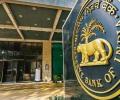
The Reserve Bank of India (RBI) booked massive gains on its foreign currency sales and needed to provide much lesser for its reserves in 2020-21 (FY21), helping it to carve out a significant Rs 99,122-crore dividend for the government, revealed the RBI's annual report for FY21. By doing so, the central bank's risk buffers have reduced to the bare minimum, which may restrict some of RBI's scale of operations, and would likely hamper dividend payout for financial year 2021-22, said analysts. The annual accounts are for nine months ended March 31, 2021 since the RBI changed its accounting year from July-June to April-March from FY21.

'I gave enough evidence and proof to punish corrupt officials.' 'But my own government has not filed any FIR against such officials.'

Ashish Chauhan, MD & CEO of BSE, says it is prudent for investors to deal with more than one exchange as a risk management strategy.

Is the RBI unable to accept with grace that beyond 55, one can have the ability to head the compliance functions in a bank, asks Tamal Bandyopadhyay.

The Reserve Bank on Wednesday retained the GDP growth forecast at 9.5 per cent for the current fiscal but cautioned that the economic recovery is not yet strong enough to be self-sustaining and durable.
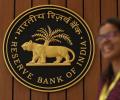
For five consecutive policy reviews in 2023, the Reserve Bank of India (RBI) chose to hold rates, citing inflation threat. And when the prices did cool off a bit, it reminded all about the target to get the headline consumer price inflation at 4 per cent and the risks from food inflation. Heading into the new year, all eyes are on when RBI will cut the rates, especially after one of the Monetary Policy Committee (MPC) members stressed on the need for such an action in the face of the US Federal Reserve's guidance for easing rates.

The governor made it clear that the RBI is aware of what's happening and acts accordingly, but doesn't make a noise about that, points out Tamal Bandyopadhyay.
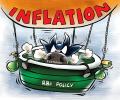
Amid a debate on the basis of a monetary policy stance, one may be curious enough to know how non-food retail inflation has behaved over the years in India. Let the eager souls catch a glimpse of facts. In the past 10 years, non-food inflation came down below 4 per cent on two occasions - pre-Covid period of 2019-20 and now in the first four months of the current financial year (FY25).

If the concerns over risking political capital are overcome, the long-term gains for the Indian economy will be immense, asserts A K Bhattacharya.

'Subjecting each such creative content to scrutiny will impose burdens on the OTT platforms and impact user experience.'

Indian stock markets are expected to be driven mostly by global factors this week amid a lack of local triggers and earnings season largely coming to an end, say analysts. Crude oil prices, rupee movement and US Federal Reserve meeting minutes to be released this week will also influence the market sentiment. "With the earnings season behind us, global cues would largely dictate the trend in the coming week," Ajit Mishra, SVP - technical research, Religare Broking Ltd, said.

Believe it or not, the regulator is even stretching its arm to identify stressed borrowers and gauge the 'distance to default' as a measure of a particular bank's fragility, reveals Tamal Bandyopadhyay.

RBI said at the current juncture, the all-out effort is to maintain and sustain, with the hope that when life is secure, resources, energy and time can be marshalled to rebuild and revive.

When it comes to the Congress and Wayanad, the only way the scepticism in the minds of some in Kerala may be addressed is by the Gandhi family proving that they are more than a passing caravan in town, reports Shyam G Menon.

Senior bankers point out that while they will eventually attract qualified professionals, onboarding them takes time.

'Unlike in the sporting arena, where sports federations moved from partisan to impartial referees, in Indian democracy's biggest festival, it appears we are moving backward from unbiased and objective to one-sided and partisan,' observes Nilanjan Mukhopadhyay.

As the Indian currency hovers around its lowest versus the US greenback, several smaller and mid-sized companies are expected to face rough weather as almost 44 per cent of the foreign loans taken by Indian companies remained unhedged. According to the data sourced from the Reserve Bank of India, Indian companies raised around $38.2 billion in the financial year ended in March. Of this, only 56 per cent of the loans are hedged while the rest of the foreign loans remain unhedged, thus risking the companies to forex volatility.

As the 240-seater prime minister attempts to moderate his image of hardline hero, he has made room for others to elbow in and that is what is happening. And that it what will continue to happen from inside the BJP, notes Aakar Patel.

The markets have been unable to sustain at higher levels as a rise in bond yields globally, especially in the US have dented sentiment. Surging commodity prices, especially crude oil that have now hit $70 a barrel (Brent) coupled with inflation woes and fear of sporadic lockdown across major economic hubs back home as Covid cases rise have chased the bulls away. In the short-term, analysts expect the markets to remain volatile as they react to news flow - both from overseas and developments back home. Investors, they say, need to keep a tab on how the US treasury yields move, which in turn will have a ripple effect on how big money moves across developed (DMs) and emerging markets (EMs), including India.

The credit guarantee cover under the scheme would be both transaction-based (for single eligible borrowers) and umbrella-based (for a group of eligible borrowers).

The country's largest stock bourse NSE on Friday said it stuck to the primary site for carrying out trading on Wednesday and did not switch to the disaster recovery site after a considered view while dealing with telecom connectivity issues which led to the nearly four-hour halt in trading earlier this week. It can be noted that Sebi had asked the exchange, which also trades the highest derivative volumes in the world, as to why it did not switch to the Disaster Recovery (DR) site. "Post shut down of trading on NSE, we considered all the available alternatives on hand including invocation of DR to decide on the course of action that would bring up the market at the earliest with least disruption to market participants and post evaluation, a decision was taken to bring up the systems at the primary site," a statement from NSE said.

'If rate cuts happen, bond yields will come down and investors will make mark-to-market capital gains on them.'

The difference between what the banks play in the US and India is not that of soccer and football but rugby and football. SVB also has a unique character. But when risks are mispriced, the fallout could be very similar, points out Tamal Bandyopadhyay.
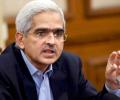
Reserve Bank of India (RBI) Governor Shaktikanta Das had stumped the market in the previous two policies - in August and in October - first with action and then with words. In August, it was the introduction of an incremental cash reserve ratio (I-CRR) to take out excess liquidity, which took the markets by surprise. In October, there was no action. Rather, what is known as "open mouth operation", Das' comment that the central bank might conduct open market operations (OMOs) by selling bonds tempered the euphoria in the bond markets after JP Morgan's inclusion of India in its Emerging Market Bond Index.

'They can transition from short to long-duration funds when the yield curve normalises.'

More and more the buck will stop at the board. Look no further than Infosys, says Amit Tendon.

As the number of students seeking higher education abroad continues to rise, several countries are implementing new rules. Gaurav Batra, CEO and founder of Infinite Group highlights how these changes will impact Indians who are planning to study abroad.

This is aimed at improving liquidity in all schemes and would help them to meet sudden redemption pressures, said Sebi chairman Ajay Tyagi.

'I think some of us, like Mukesh Ambani, myself and those of us who head industrial units, ought to really focus on what we can really do to make the world a safer place, maybe 50 or 100 years from now.' 'For instance, how can we deal with climate change and global warming, right now?' 'The effects of it may not be felt now; in fact, we may pay a price for it today, but it will help the generations to follow.'

They are making switch to the high-growth alternative investments fund industry, reports Pavan Burugula.
It is mystifying how the NSE, a near-monopoly, gets protection, as the February 24 episode shows, when it is competition and accountability that should be the regulatory objective, says Debashis Basu.

Given the fiercely competitive political environment, observers naturally associated an element of appeasement with the Shinde government's move, Shyam G Menon points out.

It has noted that melting glaciers due to any impact of climate change will not only severely affect the flow in Himalayan river system but will also give rise to natural disasters.

Rising crude oil prices, traction in China equities and inflation concerns back home are casting a shadow on the Indian equity markets in the short term, believe analysts at Jefferies. They said this could see the markets remaining range-bound in the near term before the next leg up.

Johnson, 58, had been under investigation by a parliamentary inquiry looking into whether he misled the House of Commons about lockdown-breaking parties in Downing Street during the COVID-19 pandemic.

Why did the company zero in on RBL Bank to understand the business of banking? While the M&M investors heaved a sigh of relief, one gentleman must have been all smiles after this, RBL Bank MD and CEO R Subramaniakumar, notes Tamal Bandyopadhyay.
